DISCLAIMER: This blog post is for informational purposes only and does not establish a provider-patient relationship. Always consult your healthcare provider for personalized medical advice.
Table of Contents
Your Gut: More Than a Digestive Tract, It’s an Emotional Translator
Whether it’s a churn before a tough call or tension that throws your digestion off, your gut is responding to more than just food. It's responding to you.
Your brain and gut are deeply connected. Scientists call this the gut-brain axis, and what’s happening in your digestive system can directly affect how you feel emotionally.1
At Starbird Rising Wellness, we see this often: clients report feeling foggy, low-energy, or anxious—and are surprised to learn how much of that is tied to what they eat.
Your Second Brain Is in Your Gut
Did you know your gut actually makes neurotransmitters like serotonin, which affects your mood, sleep, and even motivation? Surprisingly, nearly 90% of your body’s serotonin is produced in your gut—highlighting just how much your digestive health influences your emotional well-being.2
When your gut isn’t functioning well—because of stress, processed food, or poor digestion—your brain feels it too. You might experience:
- Mood swings
- Brain fog
- Poor sleep
- Low energy
- Heightened anxiety or irritability
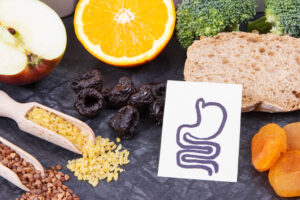
Nourishing your mind can start on your plate—with simple food choices that support emotional balance.
What to Eat for a Happier Gut—and a Calmer Mind
- Fermented Foods: Kefir, kimchi, sauerkraut, miso, and plain yogurt contain probiotics that help balance your gut and produce calming brain chemicals like GABA.3
- Prebiotic Fiber: Apples, bananas, oats, flaxseeds, and asparagus feed the good bacteria in your gut and support a healthy microbiome.4
- Omega-3s: Found in wild salmon, walnuts, flaxseeds, and chia seeds—these fats improve mood and reduce inflammation in the brain.5
- Tryptophan-Boosting Proteins: Turkey, eggs, and oats help your body make more serotonin naturally.6
- Cut Back on Sugar & Processed Foods: These can disrupt gut bacteria and negatively impact mood, sleep, and focus.
But It’s Not Just About Food
Even healthy foods don’t help much if your gut can’t properly digest them. That’s why stress management, sleep, and personalized support are just as important as what’s on your plate.
Every person’s gut is unique—what helps one person may not help another. That’s where holistic coaching comes in.
Why Coaching Can Help You Feel Better, Faster
Changing how you eat can feel overwhelming—especially when you’re already tired or not feeling your best. But you don’t have to figure it out alone.
At Starbird Rising Wellness, Dr. Barbara Rix works with clients 1-on-1 to:
- Identify which foods help (or hurt) their mood
- Balance hormones and gut health naturally
- Create simple, doable routines that fit real life
- Support lasting changes with accountability and compassion
Final Thoughts
What you eat isn’t just fuel—it’s information. It tells your body how to feel, how to think, and even how to sleep.
By tuning in to your gut, you’re also taking care of your mind. And if you’d like guidance on that journey, Dr. Barb is here to help you feel more like yourself again—calm, clear, and in control.
Need support on your journey? Explore 1:1 coaching, check out the Mindful Eating Reset course, or reach out with questions—Barb is here to help you find what feels good and sustainable for you.
References
- ↩ Cryan, J.F., & Dinan, T.G. (2012). Mind-altering microorganisms: the impact of the gut microbiota on brain and behaviour. Nature Reviews Neuroscience, 13(10), 701–712.
- ↩ Yano, J.M., Yu, K., Donaldson, G.P., et al. (2015). Indigenous bacteria from the gut microbiota regulate host serotonin biosynthesis. Cell, 161(2), 264–276.
- ↩ Dhakal, R., Bajpai, V.K., & Baek, K.H. (2012). Production of GABA (γ–aminobutyric acid) by microorganisms: a review. Brazilian Journal of Microbiology, 43(4), 1230–1241.
- ↩ Ríos-Covián, D., Ruas-Madiedo, P., Margolles, A., et al. (2016). Intestinal Short Chain Fatty Acids and their Link with Diet and Human Health. Frontiers in Microbiology, 7, 185.
- ↩ Freeman, M.P., Hibbeln, J.R., Wisner, K.L., et al. (2006). Omega-3 fatty acids: evidence basis for treatment and future research in psychiatry. Journal of Clinical Psychiatry, 67(12), 1954–1967.
- ↩ Richard, D.M., Dawes, M.A., Mathias, C.W., et al. (2009). L-Tryptophan: Basic metabolic functions, behavioral research and therapeutic indications. International Journal of Tryptophan Research, 2, 45–60.